


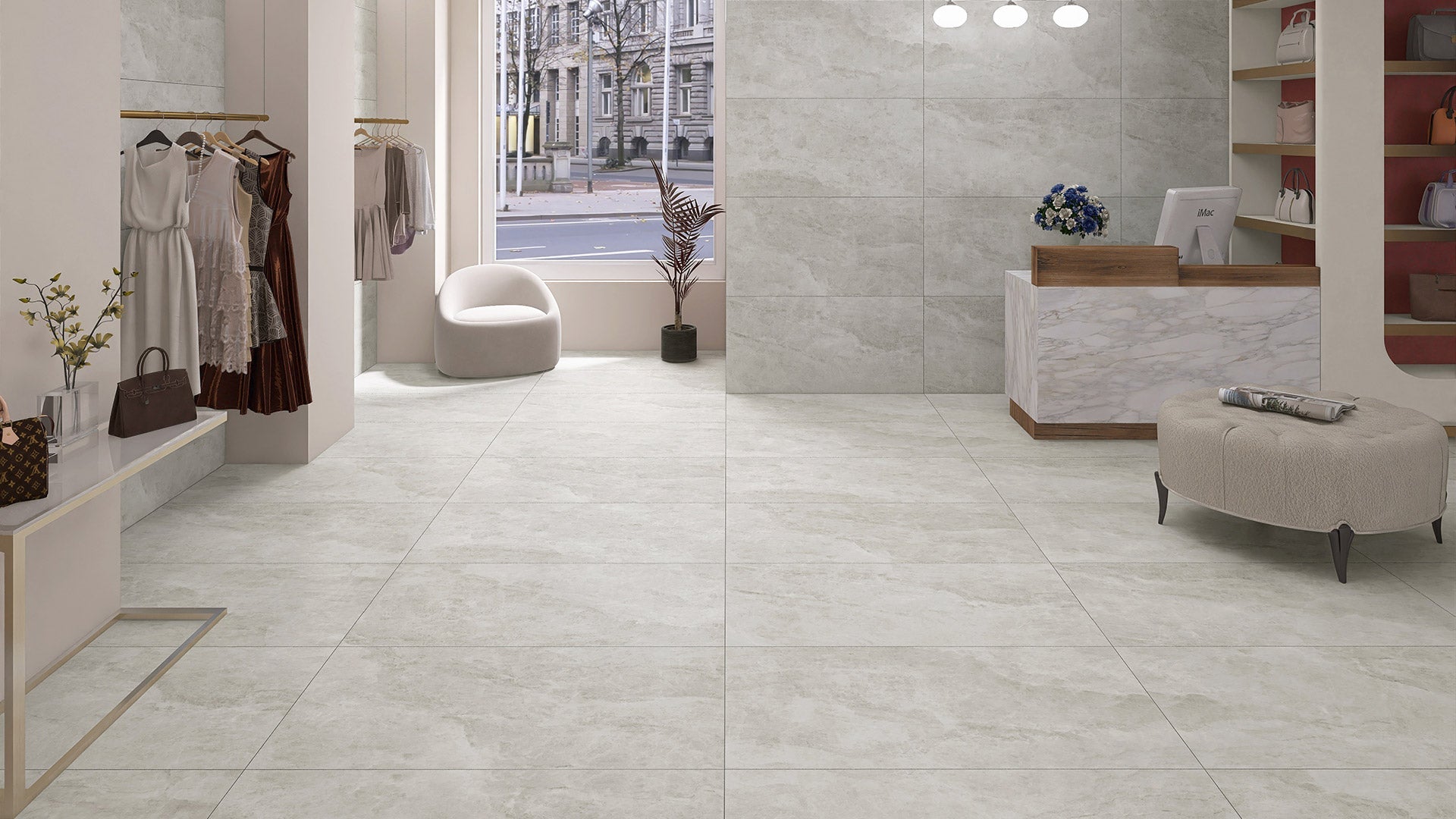
Why Architects and Designers Are Choosing Rectified Tiles
What Does 'Rectified' Actually Mean? A rectified tile is one that has been mechanically cut after firing to achieve precise, consistent dimensions on all four sides. Unlike non-rectified tiles, which may have slight size variations due to the firing process,...
Read moreabout Why Architects and Designers Are Choosing Rectified Tiles

Grout is used to fill the gaps (joints) between tiles and mosaics that have already been fixed in place with adhesive, forming a barrier that fills the void, seals, and reinforces it. Traditionally, grout has been a mixture of sand...

Understanding P-Ratings: Slip Ratings and Their Role in Tile Selection
When planning a space with safety in mind, slip resistance is one of the most important considerations — particularly for wet areas, outdoor settings, or commercial zones. This is where P-Ratings come into play. P-Ratings are measured using the Wet...
Read moreabout Understanding P-Ratings: Slip Ratings and Their Role in Tile Selection

Colour Body vs. Plain Body Tiles: Why It Matters
The core composition of a tile plays a crucial role in its appearance, durability, and suitability for different applications. The two main types of tile bodies are colour body and plain body (also known as white body) tiles. Colour Body...
Read moreabout Colour Body vs. Plain Body Tiles: Why It Matters